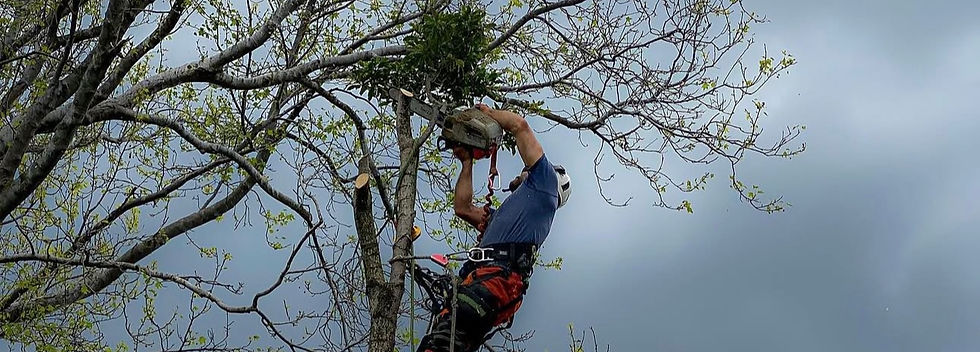
Tree Pruning
The Full Story
There are various types of tree pruning operations which have a certain purpose and desired outcome
in tree maintenance operations and may be the answer to many of your questions and problems,
these are:-
Crown reductions
Crown lifting/ raising
Crown thinning
Crown Reductions
This involves pruning the height and spread of a tree and can be a useful pruning method in
restricted areas e.g. between two properties. The benefits include:
Retaining the natural shape of a tree.
Increases light.
Reduces likelihood of nearby damage to buildings and property.
Crown lift/raising
This involves removing lower branches to have a desired outcome which include:
Creates space, and makes your garden look bigger.
Enabling clear sight along roads and streets.
Clearing paths, parkland and car parks. Overhanging branches can cause safety issues for
pedestrians and cars. Crown raising keeps the lowest branches well away from the people
and cars below.
Reduces likelihood of nearby damage to buildings, and property.
Crown thinning
With crown thinning you selectively remove smaller inner branches within the inner canopy of a tree,
but still retain the overall shape. Benefits include:
Lets more light into an area.
Trees can go through immense strain in storms and heavy winds, and a dense crown only makes
things worse. Crown thinning can help alleviate this pressure by allowing the flow of air throughout
the canopy, which may prevent, or lower the risk of branch and tree failure and ultimately damage to
property.
Aesthetically gives the tree an airier more balanced feel to it.
Dead wooding
Trees can contain dead and dying branches which can create health and safety risks, and can also
damage property, by removing the deadwood you eliminate this problem.
Bad arboriculture practice
Topping
Topping is generally used to reduce the tree height and size significantly, although this may work in
the short term, it is not recommended as you should generally not remove any more than 30 percent
of a trees crown. The tree will grow back rapidly to replace its missing leaf area, to try meet the
nutritional requirements of the tree. This will create many weak growth unions which can be
hazardous to nearby property and can pose a risk to health and safety.
Topping will affect the tree in four main ways which include:
1. Opens the tree up to fungal pathogens and rot, making large limbs dangerous.
2. The tree's leaves manufacture its food. Repeated removal literally starves the tree. This
makes it susceptible to secondary fungal diseases such as various forms of root rot a
common cause of failing trees.
3. New limbs made from the sucker or shoot regrowth are weakly attached and break easily in
wind. A regrown limb never has the structural integrity of the original.
4. The thick regrowth of suckers as a result of topping make the tree top-heavy and more likely
to catch the wind. This increases the chance of blow-down in a storm.


Let’s Work Together
Get in touch so we can start working together.


